
Visible Mold
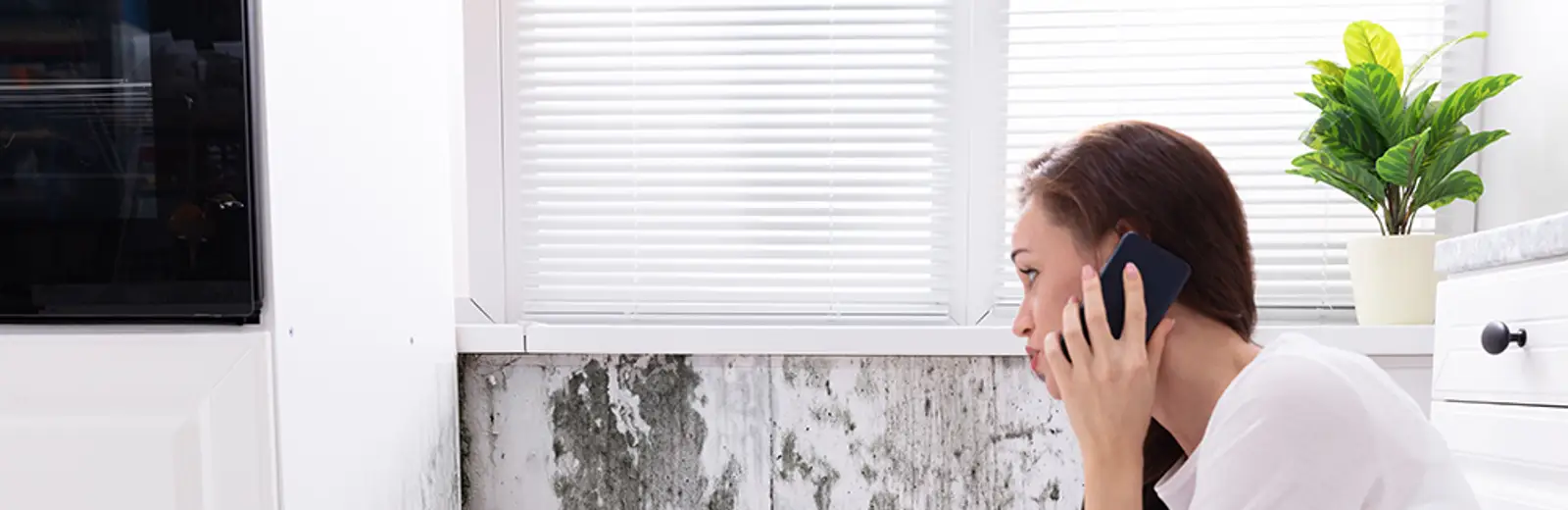
Black, green, grey or white patches on walls, ceilings or furniture.
Learn more →Mold — or mould, as it is often spelled in the UAE — is usually a sign of a moisture, humidity, AC or water-leak problem. Learn what to check, what to avoid, and when professional help may be appropriate.

Choose the issue that most closely matches what you are seeing, smelling, or measuring.
Black, green, grey or white patches on walls, ceilings or furniture.
Learn more →Damp or earthy odor but no obvious mold source.
Find hidden sources →Indoor humidity stays high even when the AC is running.
Troubleshoot →Dark spots, odor or condensation around vents and diffusers.
Check AC causes →Wet ceiling, bubbling paint, damp gypsum or water marks.
What to do first →You cleaned or repainted it, but the same area came back.
Find out why →Persistent indoor humidity above recommended levels should be investigated, especially in enclosed or moisture-prone areas.
Why is my apartment humid? →In UAE properties, mold problems often begin with a moisture source rather than a surface problem.
Cold surfaces can collect moisture when humid air reaches them.

Steam and moisture stay trapped without good extraction.

Hidden water can remain behind walls, ceilings or cabinets.
Moisture intrusion or condensation can affect cooler surfaces.

Enclosed areas may trap humid air and surface dampness.

AC lines or plumbing above can produce recurring damp patches.
A visible patch is a starting point. Humidity, condensation, water leaks, poor ventilation, HVAC conditions and cold surfaces may help explain why it developed.
Explore the moisture causes
An investigation may consider these areas. The appropriate scope depends on the problem; testing is not automatically required.
Cooling alone does not explain indoor moisture. Condensation, drainage, airflow and humidity control can all matter when investigating mold around AC components.
Irregular growth, recurring patches, moisture history, or musty odor.
Brown or yellow discoloration may indicate current or previous moisture.
Dark patterns can form around diffusers because of airflow and dust.
Water droplets on cool surfaces may point to humidity or insulation issues.
Work through these five steps before cosmetic repair. Correcting the moisture source is what prevents the problem from returning.
Note where the issue appears and whether it is spreading or recurring.
Check indoor humidity with a hygrometer and inspect for damp surfaces.
Look for leaks, condensation, AC issues, blocked ventilation or hidden moisture.
Fix the source of moisture before repainting or sealing the surface.
Clean or remove affected materials using the right method for the scale and material.
A professional process should address both the affected materials and the moisture conditions that allowed the problem to develop.

Assess affected areas and investigate likely moisture sources.
Separate the work zone and reduce cross-contamination.
Remove damaged materials and clean appropriate surfaces.
Correct moisture conditions and dry affected materials.
Inspect the completed work and plan for recurrence prevention.
The right approach depends on the material, its condition, the extent of contamination and whether the moisture source has been corrected.
Some sound, non-porous surfaces may be suitable for appropriate cleaning after the moisture issue is addressed.
Hidden cavities, layered finishes and recurring patches may need closer investigation before deciding what to retain.
Heavily affected or deteriorated porous materials may require controlled removal and replacement, depending on the assessment.
After a water leak or flood, quick action reduces the chance that damp materials stay wet long enough for microbial growth.
Stop or isolate the water source where it is safe to do so.
Photograph and document every affected area before you move anything.
Move unaffected belongings away from the moisture.
Begin appropriate drying as soon as possible.
Check porous materials and hidden cavities, not just visible surfaces.
Keep investigating any area that stays damp after drying.
Educational information only — not legal advice.
Damp and moldy environments may affect some people more than others. Understand the evidence and know when to speak with a healthcare professional.
People with significant symptoms or medical concerns should seek advice from a qualified healthcare professional. This website does not provide medical diagnosis.
Read the Health Guide →Understand AC cooling, dehumidification, ventilation, and hidden moisture.
Learn how closed rooms, humidity and changed AC settings can contribute.
Distinguish dust, condensation, surface mold, and deeper HVAC issues.
Low airflow and humid enclosed spaces can create recurring problems.
Where to check before assuming the source is inside the air ducts.
Surface cleaning does not solve a moisture source that remains active.
Answer four short questions to see likely areas to investigate and practical next steps. This is guidance, not a diagnosis.
Professional assessment may make sense when mold repeatedly returns, affects a large area, follows significant water damage, or involves concealed materials or HVAC components.
Our guides reference UAE and international public-health and building-science sources, and clearly separate educational information from commercial services.
Persistent indoor humidity above recommended levels can increase the likelihood of condensation and mold, especially on cool surfaces or in poorly ventilated areas. A common target is to keep indoor relative humidity below 60%.
Recurring growth usually means the moisture condition has not been fully corrected. Humidity, leaks, condensation, or damp materials may still be present.
AC systems can be involved when condensation, drainage, insulation, airflow, maintenance, or humidity control problems allow materials to remain damp.
No. Colour alone cannot identify the species or determine the level of health risk.
The correct approach depends on the material, scale, moisture source and extent of contamination. Surface treatment alone will not solve a recurring moisture problem.
No. In many cases, a careful visual and moisture inspection is the better first step. Testing is useful when it answers a specific question.
Changes in AC operation, reduced ventilation, closed wardrobes and sustained humidity can allow moisture to accumulate while a property is vacant.
Stop the source where safely possible, document affected areas, begin appropriate drying, and investigate materials that stay damp or are hidden inside cavities.

Mold Guide UAE is an educational mold, moisture and remediation resource supported by BioSweep Middle East LLC, a Dubai-based indoor air quality and environmental hygiene company operating in the UAE since 2011. If a small problem can reasonably be managed without full professional remediation, our guides say so.
Whether you are in a Marina tower, a Nad Al Sheba villa, a JVC apartment or a townhouse in Al Warsan, the mold pattern is the same — find the moisture, fix it, then remediate. Professional inspection and remediation through BioSweep UAE is available across the emirate.
Not listed? We still cover it — get in touch.
Start with the problem you can see — then investigate what may be causing it.
Send clear photos of the affected area, any nearby AC vent or plumbing, and signs of condensation or water damage. That helps identify whether the next step is monitoring, repair, HVAC work or a professional mold assessment.